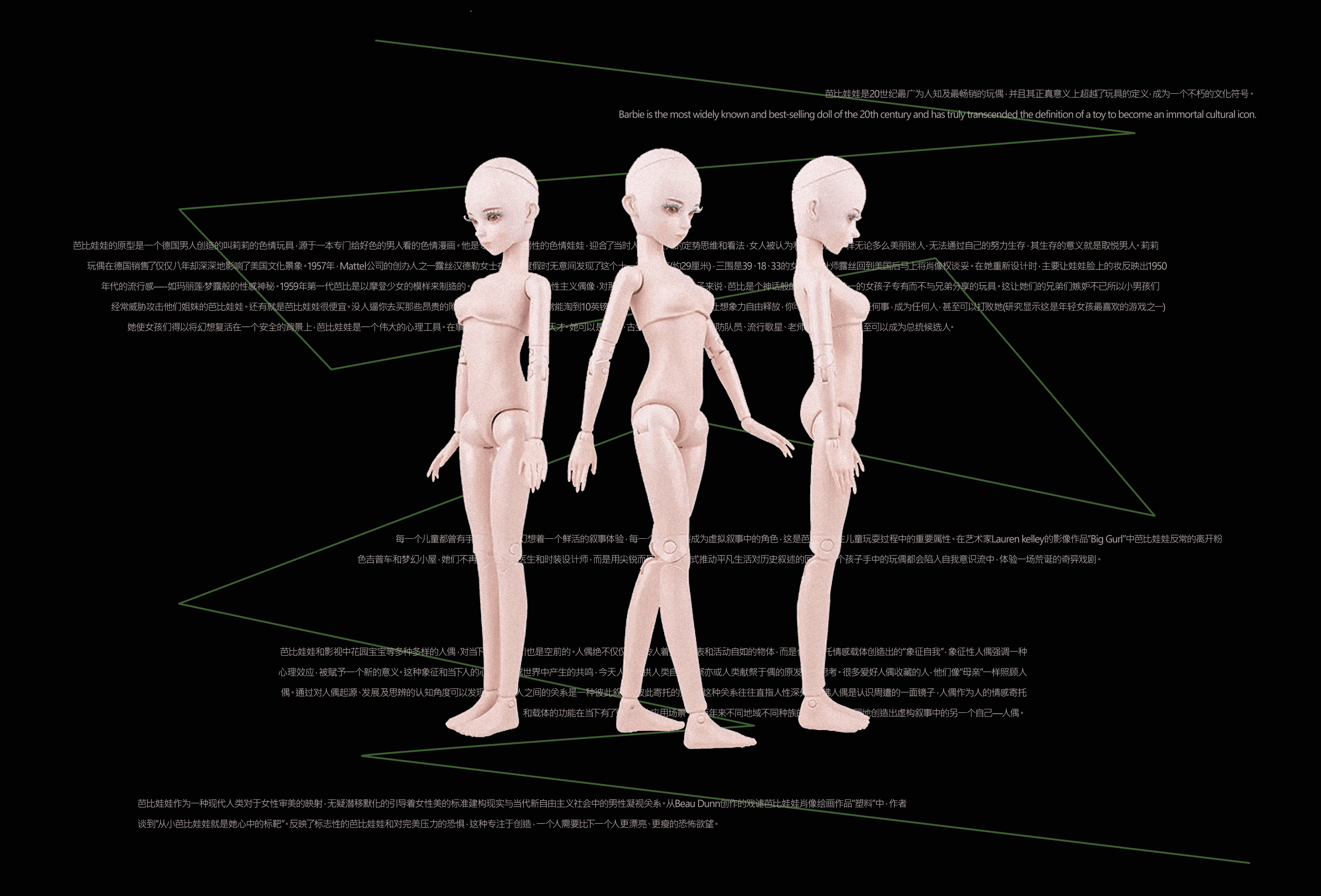
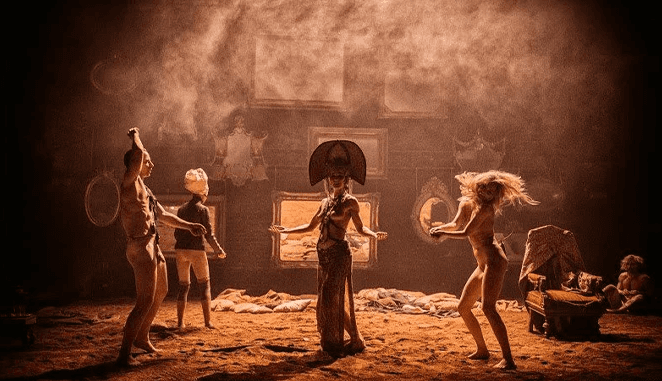
In 2021, TTTB Artist-Run Space launched research and reflection under the theme of A Barbie Cannot Understand a Makka‑Pakka. TTTB issued an open call for artworks, curated two virtual exhibitions around the theme, and created eigth visual publications.
The exhibition begins with two kinds of figures. Barbie was one of the most recognisable and best-selling dolls of the twentieth century. More than a toy, she has become an enduring cultural icon. Shaped by consumer culture, standards of beauty and ideas about gender, she comes with identities, careers, appearances and ways of life already mapped out for her. She has also become a figure onto which modern culture projects its ideals.
Human figures arise from an old impulse: to give an abstract story or feeling a body made in our likeness. In ritual and burial, such figures have sometimes served as substitutes for the living. They could take a person’s place in death, bear a divine presence or accompany the dead into another world. They have also appeared as characters in theatre and, later, entered the world of entertainment and consumption. Our relationship with them runs both ways. We tell stories through them, entrust feelings to them and see ourselves reflected back. Why do we keep making figures that resemble us, only to project our desires, emotions, identities, fears and mortality onto their lifeless bodies?
The characters of the British children’s television series In the Night Garden inhabit another world. Dreams, murmurs, repeated actions, the irrational, children’s perceptions and strange beings form a utopian garden beyond the logic of everyday life. The series unfolds in a child’s imagination between waking and sleep, inviting young viewers to explore the world. Igglepiggle is a lone sailor; where he came from and where he is going remain unknown. Upsy Daisy kisses whatever she can find. Makka Pakka cleans whatever he can find. The series seeks to nurture children’s language skills, sense of number, spatial perception, musical intelligence, self-awareness, emotional life and imagination...
The characters of the British children’s television series In the Night Garden inhabit another world. Dreams, murmurs, repeated actions, the irrational, children’s perceptions and strange beings form a utopian garden beyond the logic of everyday life. The series unfolds in a child’s imagination between waking and sleep, inviting young viewers to explore the world. Igglepiggle is a lone sailor; where he came from and where he is going remain unknown. Upsy Daisy kisses whatever she can find. Makka Pakka cleans whatever he can find. The series seeks to nurture children’s language skills, sense of number, spatial perception, musical intelligence, self-awareness, emotional life and imagination…
There is Barbie; there are Igglepiggle, Makka Pakka and Upsy Daisy; and there are dolls, offerings, rituals, plastic, apples, Eden, prophecies, strangeness and murmurs... We are both Barbie and a Garden Baby.
We can make a garden, yet we have no right to enter it. Hidden in the garden is a prophecy that reveals an absurd law: “Those who have eaten the apple cannot return to the Garden of Eden.”
There is Barbie; there are Igglepiggle, Makka Pakka and Upsy Daisy; and there are dolls, offerings, rituals, plastic, apples, Eden, prophecies, strangeness and murmurs… We are both Barbie and a Garden Baby.
We can make a garden, yet we have no right to enter it. Hidden in the garden is a prophecy that reveals an absurd law: “Those who have eaten the apple cannot return to the Garden of Eden.”
Inside pages display, TTTB Visual Book, 2021—2022.
A Barbie Cannot Understand a Makka‑Pakka because the states they inhabit cannot understand one another. One belongs to a world shaped by socialisation; the other to an imagination that has not yet entered the social order. Their ways of perceiving the world cannot be translated into one another.
We should resist the urge to laugh at Barbie and the Garden Babies. Laughter might keep us from seeing the meanings they carry.
A Barbie Cannot Understand a Garden Baby begins with tensions between adult and child, reality and dream, social norms and the irrational, social identity and a state without a fixed subject, a shaped ideal and life not yet brought into order. It then follows these tensions back through older cultural roles of the human figure: sacrifice, substitution, divinity, death and theatre.
Exhibition Time:
November — December 2021
TTTB Site-Specific Space: ICE SHRINE
Building on its exploration of the overarching theme, TTTB conceived its first virtual exhibition, Mint · Flag · Avalanche.
The exhibition is set in "ICE SHRINE", a site-specific virtual environment created by TTTB. Frost and frozen earth cover the building’s containment zone. The air is dry and acrid, carrying a mingled scent of apple, pine needles and mint. Unexplained phenomena recur throughout the area. After the site was sealed off for observation, a substance called "Avalanche" , drawn from Neal Stephenson’s novel of the same name—was found to have already spread throughout it. Further investigation revealed that the substance also functions as a computer virus. It travels through both digital networks and the physical world, causing systems to generate themselves and producing visual anomalies.
Mint, Flag, Avalanche seeks to awaken a digital sensibility already taking shape. It invites us to encounter unfamiliar forms of virtual space and time, or a fully immersive internet, within familiar surroundings. The exhibition anticipates an absurd worship of the internet and digital technologies in the post-internet age. Once, within the dream of an online utopia, each of us became a digital sacrificial offering.Where the signal cuts out, you will trace a path of your own.
The exhibition is set in “ICE SHRINE”, a site-specific virtual environment created by TTTB. Frost and frozen earth cover the building’s containment zone. The air is dry and acrid, carrying a mingled scent of apple, pine needles and mint. Unexplained phenomena recur throughout the area. After the site was sealed off for observation, a substance called “Avalanche” , drawn from Neal Stephenson’s novel of the same name—was found to have already spread throughout it. Further investigation revealed that the substance also functions as a computer virus. It travels through both digital networks and the physical world, causing systems to generate themselves and producing visual anomalies.
Mint, Flag, Avalanche seeks to awaken a digital sensibility already taking shape. It invites us to encounter unfamiliar forms of virtual space and time, or a fully immersive internet, within familiar surroundings. The exhibition anticipates an absurd worship of the internet and digital technologies in the post-internet age. Once, within the dream of an online utopia, each of us became a digital sacrificial offering.Where the signal cuts out, you will trace a path of your own.
The exhibited works, 2021.
Exhibition Time:
March - April 2022
TTTB Site-Specific Space: DOLL THEATRE
Artist:
YuJie Cao(曹钰婕)、QiPeng Deng(邓启鹏)、
XiaoXiao Deng(邓潇潇)、Dengke Li、RongHua Guo(郭容华)、ZhengXiao Jin(金郑晓)、雷根REGEN、JiaHe Li(李佳和)、YanJing Li(李彦镜)、ZiLi Li(李子澧)、YuTing Liu(刘雨婷)、HuaiYuan Ren(任淮源)、YuJie Xu(徐玉杰)、Weekweek、
Hui Zhang(张回)、Ruo Zhang(张弱)、YiWen Zhang(张怡雯)
The exhibition takes place in DOLL THEATRE, a site-specific virtual environment created by TTTB. The TTTB team translated works submitted through the open call into virtual form, bringing them together in Shell · Flesh · Cage, the second exhibition developed around the overarching theme.