04
Each of us inhabits a situation unlike anyone else’s. Each situation has its own order. When two people meet, one order collides with another.
I Just Heard Myself Breathing.
I Don’t Know Whether It Was the Painting or Me

North Exit Two, 2024, Installation, dimensions variable
Haoran Chen:
North Exit Two

He has been living here since 2019. An ENTJ with room for cats, dogs, dragons, birds and models.
Esther Liu:
Declaration of Independence
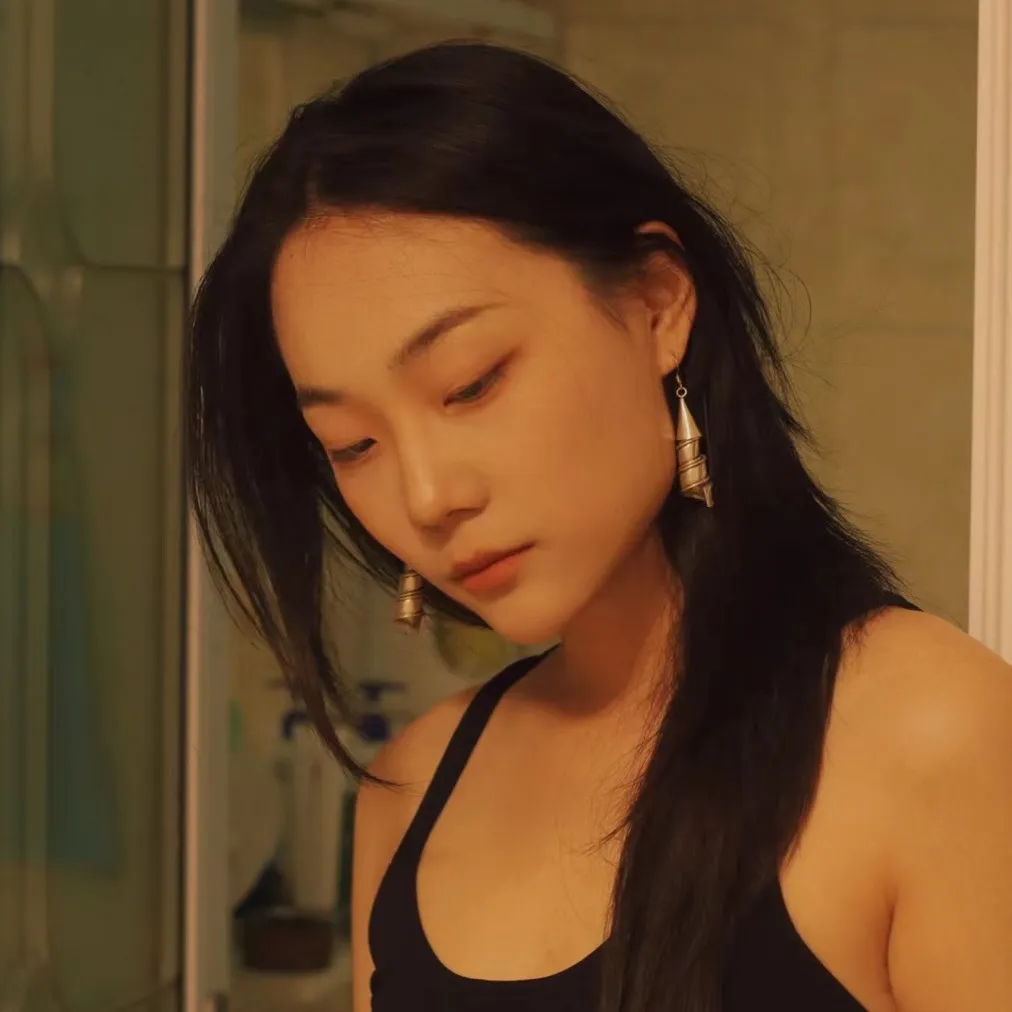
“I wander all over Yanjiao, drop in on friends and go to see the Chaobai River in different seasons, at different times of day.”
A suitcase is a means of travelling far and a sign of leaving an old environment behind. Yet wherever we go, an unformed inner self will, in certain situations, reveal that we are still “infants”.

Declaration of Independence, 2020, Installation, dimensions variable

All for Lili, 2017, Photography, dimensio
Siyuan Zhang:
All for Lili

Likes Taiwanese food. Lived in Phase I of Xiaweiyi Nanan and in Huifu Yuerongwan from 2019 to 2023.
I gave this toy to Liao. It carries how much I miss my bro.
Hao Chen:
Blue Ruins
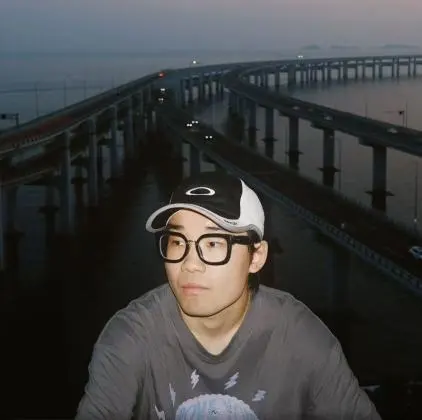
“I’m a positive, optimistic person.”
This was the first butterfly specimen he made: a great blue hookwing, known in Chinese as the “lovebird butterfly”. It holds his thoughts about love and his hopes for the future. Someone wanted to buy it, but he has never parted with it. Its blue wings are a swirl of the Milky Way, carrying thoughts and feelings bound up with his girlfriend.

Blue Ruins, 2023, Butterfly specimen and postcards, dimensions variable
03
Boundaries are fragile constructs, like our continually shifting identities in a liquid society.
Where Is the “Other Shore”
Today?


PROZAC, 2024, Readymade installation, dimensions variable
Siran Zhang: PROZAC
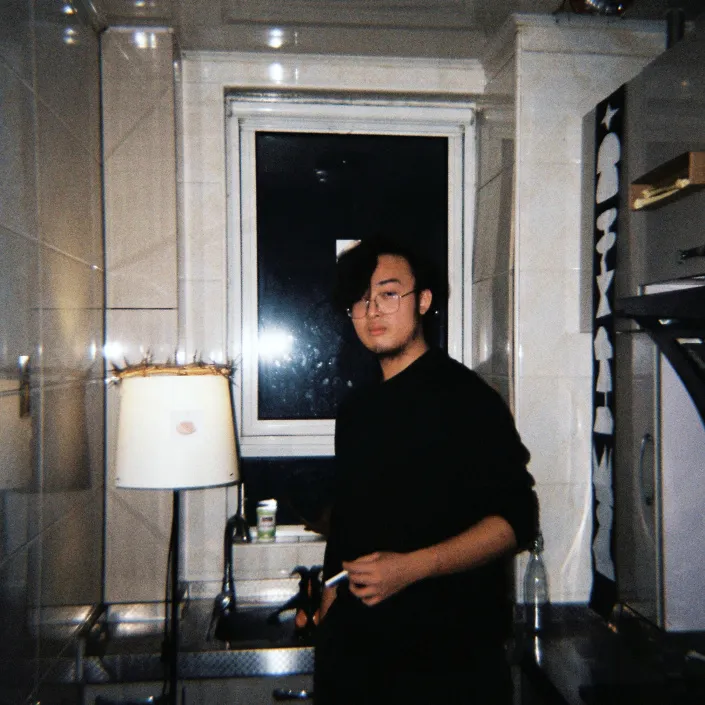
Good at overthinking and cooking.
“When I first lived here, I didn’t know what it meant to really live. So I started with cooking, learning from scratch and pulling myself out of the mire, little by little. If I had to distil ‘home’ into an image, it would be the kitchen, not a bed, a sofa or a dining table. The kitchen is the evidence and the trace of my life here. I translate ‘home’ into all kinds of objects: a thorn lamp, monsters, ‘Death’ in tarot. Death in tarot represents a new beginning.”
“The objects in the kitchen weren’t chosen. They are the ones most closely connected to my body. The long, narrow kitchen in Yuerongwan, the way the view through the window and the interior space nest within one another—for me, this is how life takes shape.”
A bonfire, artificial grass, sculpture, webs of dust, monsters, a bat smashed flat, a thorn lamp—the familiar is made strange. The kitchen becomes a metaphor for modern life.

Floating Objects, 2024, Installation, dimensions variable
Qizheng Gai:
Floating Objects

From Qingdao, Shandong. Focuses on cultural circulation, misreading and mixing in a globalised world.
“Through the glass, you can see the Chaobai River glittering. This photograph takes me back to the day I took to the water. The sunlight was blinding that day too. Sitting on the raft, I moved further and further from the bank, watching Fanqian, Allen, Siyuan and Siran on the opposite shore. At the time, I hadn’t thought about what would happen next.”
I made a makeshift raft by hand and drifted down the Chaobai River. Like those who move from place to place, I drifted outside solid systems, into the boundless unknown.
Yulu Ge:
Spring in a Small Town
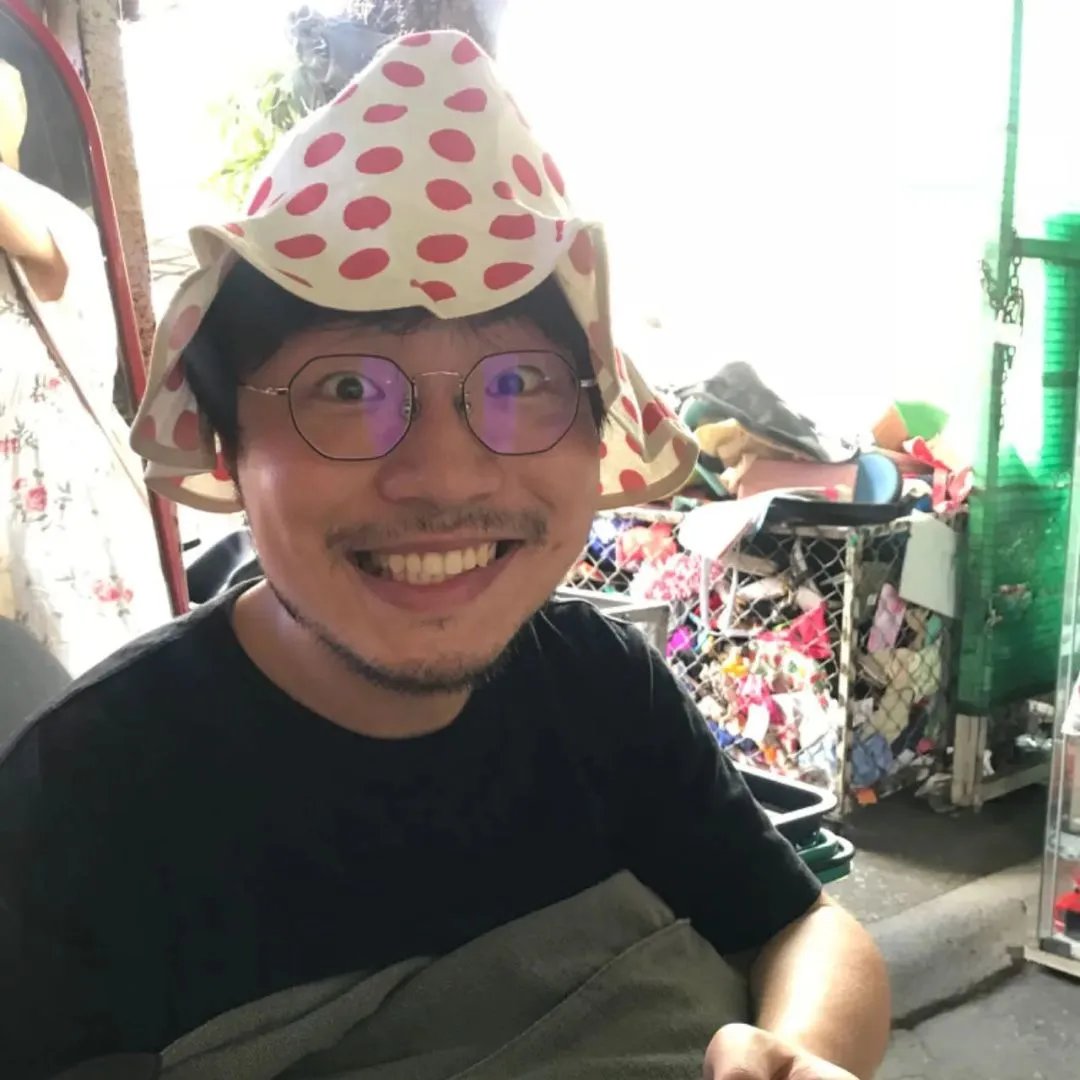
Artist. Lives and works in the region surrounding Beijing.
In the wit and humour of Ge Yulu’s Spring in a Small Town, I see his close attention to Yanjiao’s complexity and emotional depth. The work addresses locality and mobility in the process of urbanisation. The wildness and freedom of the borderlands, the movement and instability of life between cities—these shape this enclave’s distinctive ecology.
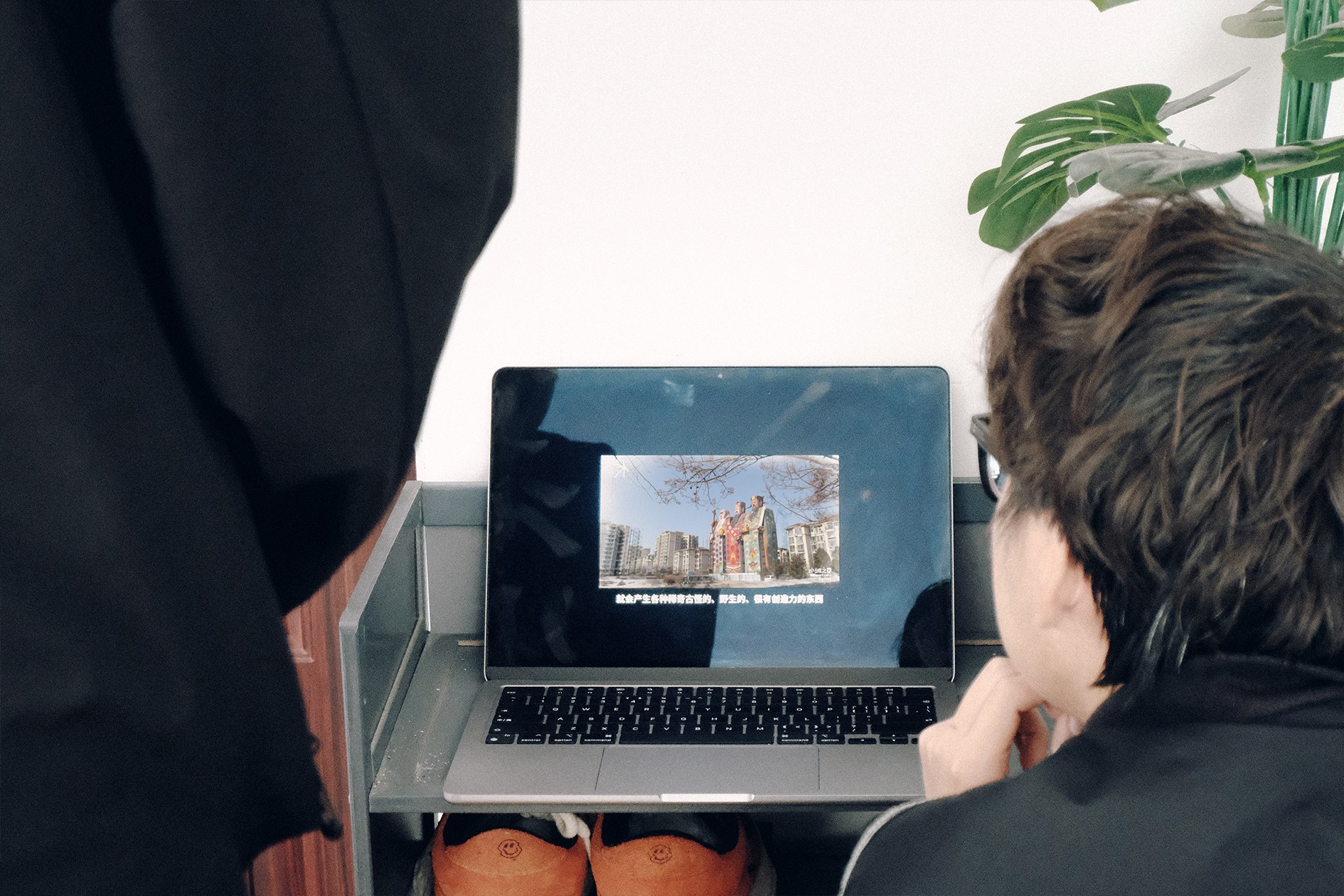
Spring in a Small Town, 2022, Video, 7 min 42 sec

What Holds My Heart Is across the River, 2024, Installation, 160 × 120 cm
Yibai Ma:
What Holds My Heart Is across the River
Artist. Long interested in the disjunction between corporeality and the ideology of the social subject.
In early 2022, I was told that my studio in Shunyi was to be demolished at short notice. I rushed to find a studio in Yanjiao and lived there for almost two years. The studio was in Yudong Ruijing, in southern Yanjiao.
Haowen Zheng:
Collected Poems from Manhole Covers, Rubbings
At the end of 2019, I was living in the dorms at CAFA’s Yanjiao campus. That autumn and winter, my art’s future was at its brightest. Now the path keeps narrowing. I still can’t get out of Yanjiao. Yanjiao is a little Paris.
Rubbings from manhole covers on the Yanjiao campus. Because of the academy’s particular status, inside the campus is “Beijing”; outside is Yanjiao, Hebei.

Collected Poems from Manhole Covers, Rubbings, 2019 Print, 42 × 15.6 cm

Do Not Go Gentle across That River, 2022, Images and text, 60 × 280 cm
Yuxin Wu:
Do Not Go Gentle across That River

Writer and graphic designer. Lived at the academy and in Dongfang Xiaweiyi from 2019 to 2023. Explores and reworks the narrative techniques of fairy tales and folklore. Looks at narratives of social groups through ethnographic and sociological perspectives. Seeks ways to push beyond the boundaries of nonfiction writing.
In the instant of crossing, identity is scattered—adrift, yet becoming one, like water merging into the river.
Xin Feng:
River · Confluence
Lives and works in Yanjiao and Beijing.
My eyes are fixed on the Chaobai River. My story is here.

River · Confluence, 2024, Mixed media, 50 × 40 cm

One Hundred and Twenty-Two Days, 2024, Mixed media, 133 × 94 cm
Yuna Wang:
One Hundred and Twenty-Two Days
Designer. Lived in Yuerongwan from 2023 to 2024.
“I selected photographs I took casually while living in Apartment 2502, Unit 2, Building 9, Yuerongwan. In the 309 days since I left, my memories of Yuerongwan have also slipped away with time. I will always remember the stories that unfolded here, though the faces and expressions have long since blurred. Perhaps memory is only a way of reconstructing and imagining moments from the past. When the figures become blank, all that fills them is my longing and attachment.“

Unbroken Silence, 2019–2024, Materials and archival records, dimensions variable
Zhiyuan Yang:
Unbroken Silence
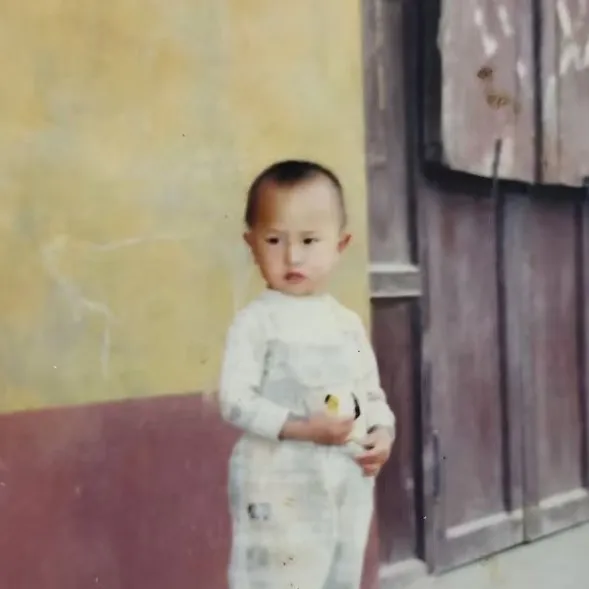
Designer. Four undergraduate years at CAFA Yanjiao Campus; after graduation, really ended up on the assembly line.
“I stubbornly turn back to that page in my diary; only then do I dare believe it all really happened. These memories dart through a vacuum. I have lost the capacity to feel anything for this land, and the desire to look back at it.”
Ying Chen: Reeds at the River’s End, Waterweed on the Far Bank
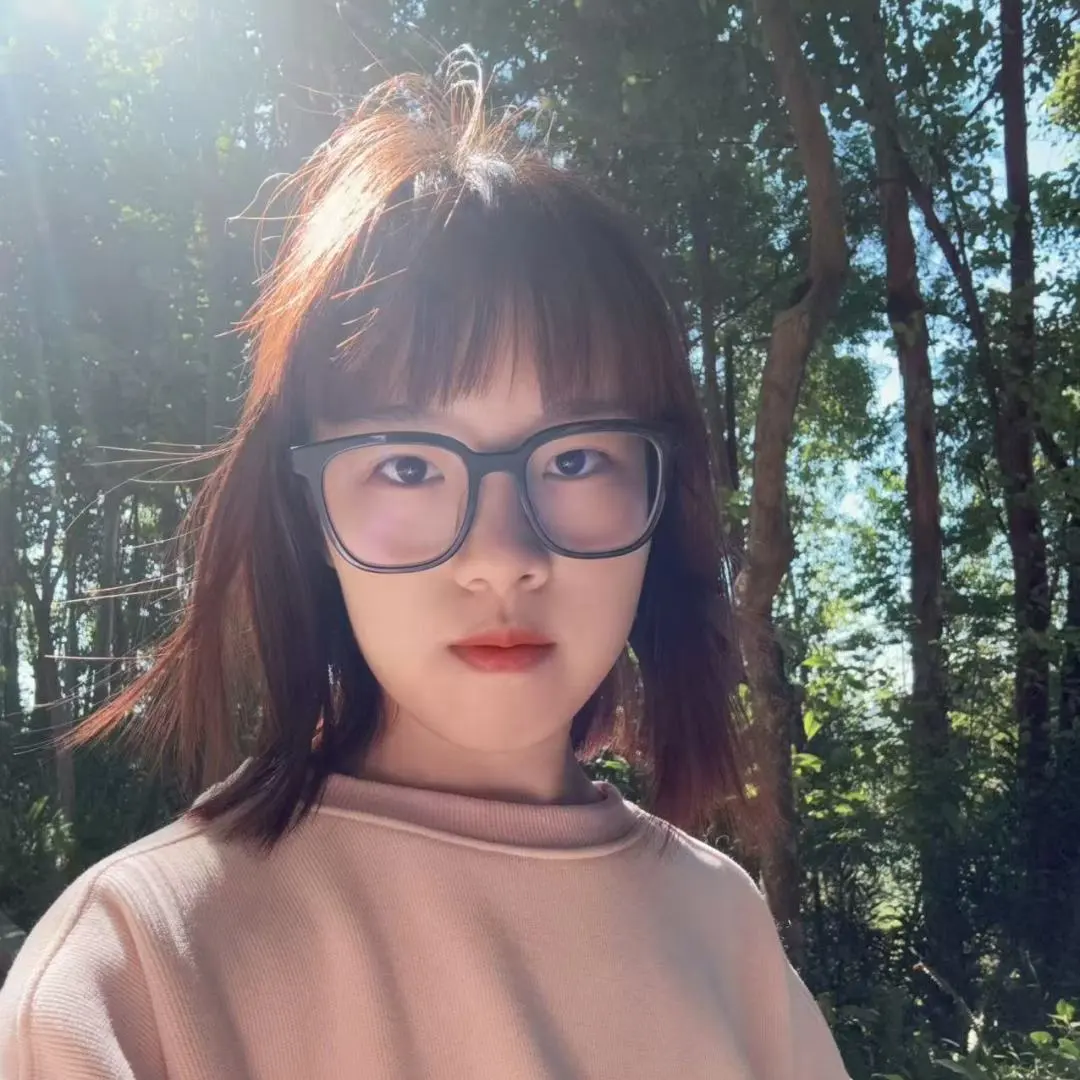
“That time, I left before I could say a proper goodbye. Those blurred memories melt in my mind into moments that feel somehow familiar.”
Yepeng Liu:
The Gaps of Memory
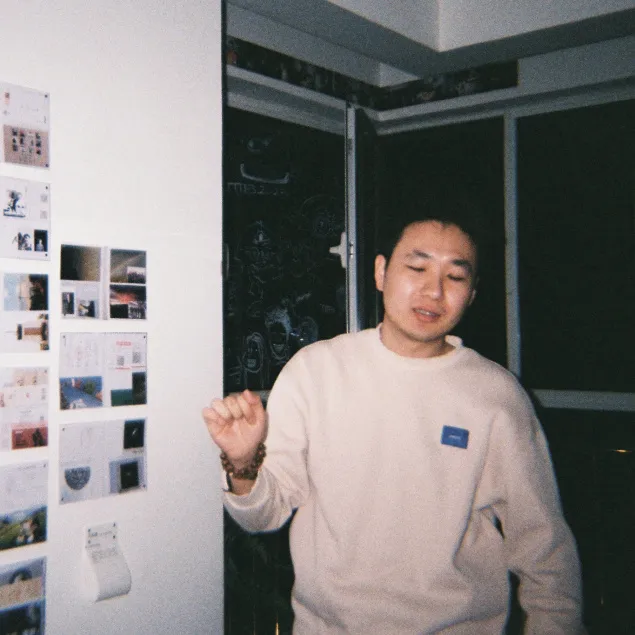
Spatial designer and musician. He founded the electronic music duo SYSTEM CRASHIN-DOWN. He lived in Xiaweiyi Nanan from 2018 to 2024.
“Traces of life vanish in an instant, becoming memories. These collected receipts, photographs and slips of paper are the gaps of memory—feelings, learning, everyday life, and my years in the military.”
Zekun Cai:
A Letter from No. 11 to No. 6
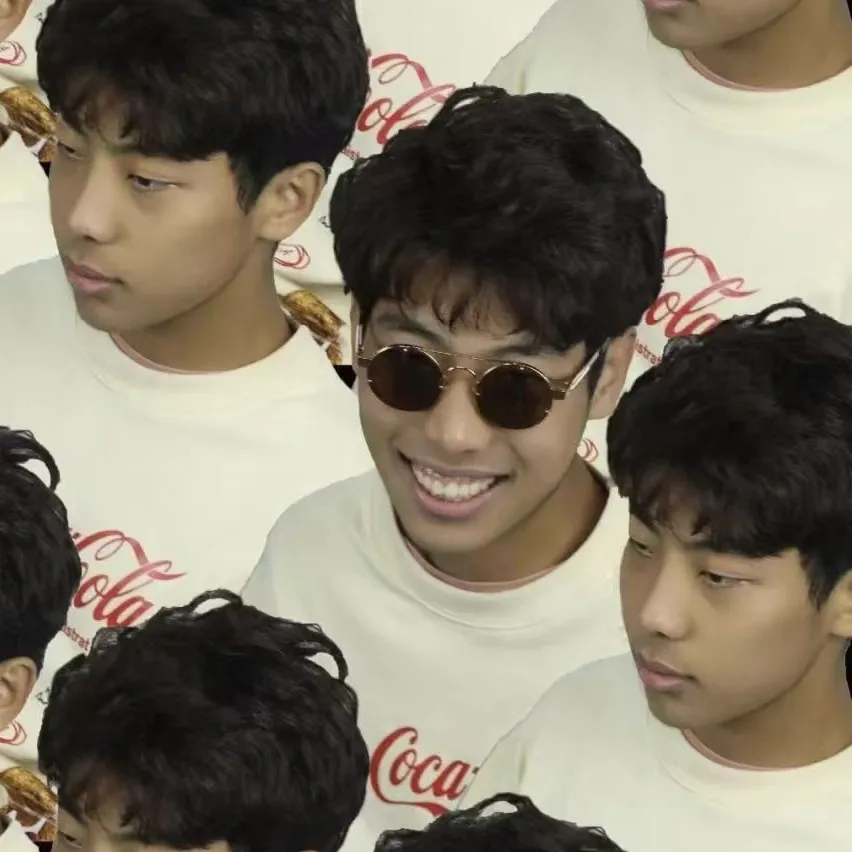
Designer, Lived in Building 19, Yuerongwan, from 2021 to 2023.
In the end, between light and shadow, all of this will come together to form us to my best friend.
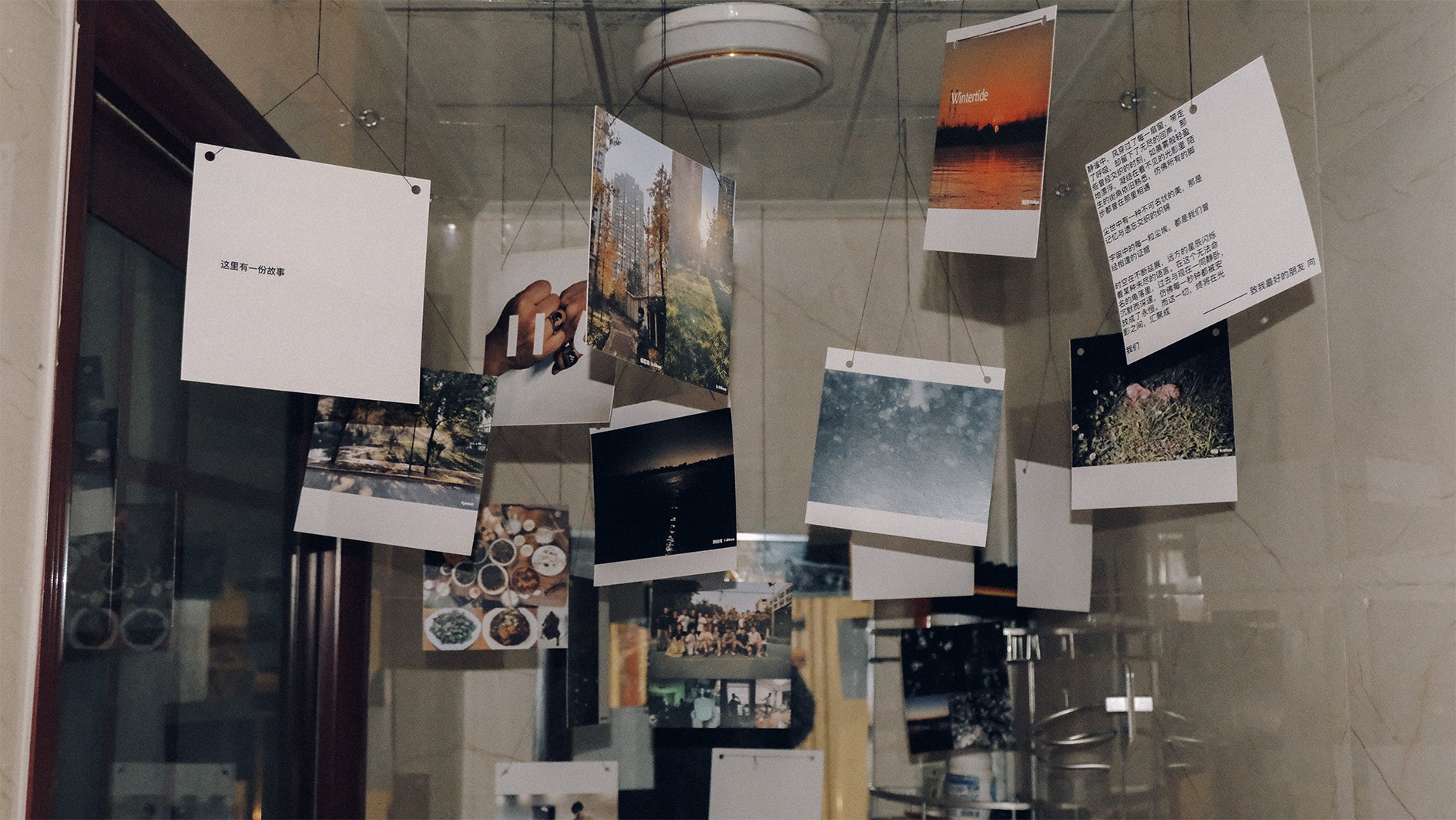
Here Is a Story, 2021–2023, Image archive, dimensions variable

Traces of Life, 2024, Text and image archive, dimensions variable

Junzhou Yao:
Texture Corrupted
3D animator, mecha enthusiast. Lived at the academy and in Xiaweiyi Nanan from 2019 to 2023.
“Some memories are like 3D files that haven’t been opened in a long time: once the linked files are moved, the connections break. The memories may return, or they may never return. Here, our real memories of the Chaobai River come together.”
02
"There is no time. For the river there is only the present, neither the shadow of the past nor the shadow of the future. Life, too, is a river."
— Hermann Hesse, Siddhartha
In the Gaps of Memory
Reeds at the River’s End, Waterweed on the Far Bank,
2022–2024, Images, dimensions variable
"The whole tree itself is but one leaf, and rivers are still vaster leaves whose pulp is intervening earth, and towns and cities are the ova of insects in their axils." — Henry David Thoreau, Walden
Texture Corrupted, 2024, Digital video, 12 seconds
Shane Shi:
Wind Rises in Silence

Shane is a former product designer, he now makes high jewellery and researches conceptual jewellery.
Shane’s work is a set of earrings shaped like swallow kites. For him, kites suggest constraint and the pull of a line, but also a measure of freedom—much like home. A kite that has never taken flight is like those of us who have never left home. Silent as the wind rises, the kite is each of us: longing for the unknown beyond, yet still drawn back to earlier days by an invisible line.

Eight Shayan Kites, August 2024, Silver, 60 × 20 mm

The Chaobai River Is a Harbour, 2022, Oil on canvas, 60 × 90 cm
Kun Wu:
The Chaobai River Is a Harbour
Artist. Lived in Yanjiao during the summer and autumn of 2022.
“There was a large café downstairs, and outside the window a dense cornfield. It was summer then. Gradually, I felt a sense of expansiveness that went beyond ease, and found the energy and courage to set out again…”
Looking out through the window of Dixing Café, Kun Wu captures the city as it is. The distant high-rises and the desolate cornfield in the foreground form a small-town landscape where rural life and modernity meet.
Allen Ren: On Life, On Making, On What We Hold On To

Artist. Faculty member at the Central Academy of Fine Arts (CAFA).
A self-styled right-handed practitioner of Old Media Art.
“I was thinking back today—I guess I’ve been spending time in Yanjiao since around 2015. I’ve lived in so many places here—Xiaweiyi Nanan, Yuerongwan, and the complex I live in now. I can’t even name them all. But the place I’ve spent the most time is the academy. So what I’ve brought is material from a course I teach there, ‘Media Culture Studies’. These photographs were taken from roughly the same angle at each class. Then there’s the course attendance sheet, though it’s labelled ‘Grade Report’. Finally, there’s a text I typed up from a recording at the end of the course.”

On Life, On Making, On What We Hold On To, 2024, Text and image archive, 21 × 29.7 cm

Untitled, 2023, Photography, 20 × 16 cm
Zijia Wang:
Untitled
Photographer.
These photographs record everyday moments along the road on the Chaobai River’s left embankment. The river’s rise and fall erodes the traces of modern life. Wang Zijia lives in Nadanbao, Yanjiao. Because he doesn’t like wearing a helmet on his electric bike, he often takes the river embankment route. The smell of horse manure tells him when to turn towards home.

Chaobai in Fragments, 2021–2023, Photography and text, 11 × 8.7 cm
Shengsheng Li :
Chaobai in Fragments
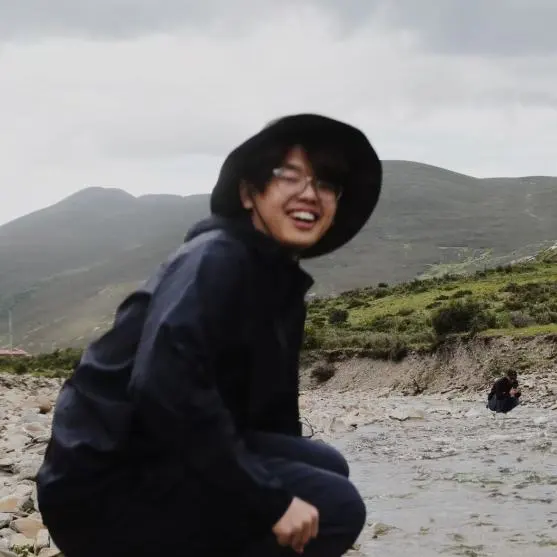
Designer. Likes roaming aimlessly around Yanjiao on an electric bike.
Memories of this place are pieced together from fragments of buildings and scenes: Baimiao Station, the Chaobai River, Yanda Hospital, the CAFA building, European-style buildings, the power station, AEON Mall on the wasteland, Yuerongwan, Mama Xu…
Shuangqiang Li :
Trying to Forget within Tertiary Retention

Artist. Lived in Phase II of Xiaweiyi Nanan since 2017.
“When I’m living alone, looking at Patrick Star makes me feel I have company. So many memories still feel as though they happened yesterday. This place is just as it was in 2017. Nothing has changed.”


Trying to Forget within Tertiary Retention, 2021–2024, Painting, readymades, dimensions variable
Jinmao Xiang:
Scavenging

Graphic designer. He hoards digital image junk in his spare time and dreams of a terrace filled with flowers.
"I came to Beijing when I was six and moved between many homes. Yanjiao was my first home. I didn’t know who I was, so I decided to begin by getting to know my surroundings. With home as my starting point, walks around the neighbourhood became a way to recalibrate my sense of myself."


Scavenging, 2020–2024, Publication
01
Between wandering and staying, follow where the heart belongs; live with sincerity and honesty.
Where the Heart Is at Peace
“The proposition ‘life is a work of art’ is not a postulate or an admonition… but a statement of fact.”
— Zygmunt Bauman, The Art of Life

Installation Views, If You Lived Here(若你居于此处), 2024


The exhibition title If You Lived Here(若你居于此处) derives from Martha Rosler’s 1989 project If You Lived Here... organised at Dia Art Foundation in New York. Rosler addressed housing, displacement and homelessness through exhibitions and public discussions, encouraging reflection on personal living conditions and the profound impact of urban development upon lives.
I returned to the phrase while developing this exhibition in the Yanjiao apartment. This phrase, spare yet rich in meaning, struck me deeply. There, it became a way to ask: If you lived here, your story continues through this land. What memories will you carry with you as you move on?
The exhibition title If You Lived Here(若你居于此处) derives from Martha Rosler’s 1989 project If You Lived Here… organised at Dia Art Foundation in New York. Rosler addressed housing, displacement and homelessness through exhibitions and public discussions, encouraging reflection on personal living conditions and the profound impact of urban development upon lives.
I returned to the phrase while developing this exhibition in the Yanjiao apartment. This phrase, spare yet rich in meaning, struck me deeply. There, it became a way to ask: If you lived here, your story continues through this land. What memories will you carry with you as you move on?
Source of the theme
Martha Rosler, If You Lived Here... Multi-part exhibition project,
Dia Art Foundation, New York, 1989
Martha Rosler, If You Lived Here… Multi-part exhibition project,
Dia Art Foundation, New York, 1989

Exhibition Concept
Situated in the place where I lived for four years, If You Lived Here(若你居于此处) is a reflection on dwelling, belonging, and imagination. The exhibition attempts to capture places, emotions, and memories that are constantly shifting between the fluid, the suspended, the enduring, and the vanishing.
Installation Views, If You Lived Here(若你居于此处), 2024

Exhibition Poster, If You Lived Here(若你居于此处), 2024
The exhibition If You Lived Here(若你居于此处) is a meditation on dwelling, belonging and imagination. It attempts to capture places, feelings and memories as they flow, drift, solidify and disappear. Every corner bears witness to lives once lived and will soon become a trace of the past itself. It is a memorial to lived experience, an echo of feelings that remain unerased.
If you have ever lived here, your story continues through this land. What memories will you carry with you as you move on?
The exhibition If You Lived Here(若你居于此处) is a meditation on dwelling, belonging and imagination. It attempts to capture places, feelings and memories as they flow, drift, solidify and disappear. Every corner bears witness to lives once lived and will soon become a trace of the past itself. It is a memorial to lived experience, an echo of feelings that remain unerased.
If you have ever lived here, your story continues through this land. What memories will you carry with you as you move on?

Exhibition Documentation: A chronicle of art events along
the Chaobai River. If You Lived Here(若你居于此处), 2024
"Once the image in memory is fixed by words, it is erased." "Perhaps I do not want to tell the whole story of Venice because
I am afraid of losing it all at once. Or perhaps, while telling the stories of other cities, I am already losing it little by little.”
— Invisible Cities
“Once the image in memory is fixed by words, it is erased.” “Perhaps I do not want to tell the whole story of Venice because
I am afraid of losing it all at once. Or perhaps, while telling the stories of other cities, I am already losing it little by little.”
— Invisible Cities

All that we do is leave traces and enter into dialogue with this land, a silent inscription, a wordless farewell. We cannot relive memories that have already vanished. We can only reflect on them within an abstract, one-dimensional time stripped of all depth.
04
Bridges span the river, leading towards Beijing. Before we know it, you and I are swept back into the restlessness of the city.
"Flow" is a condition of modern life; in movement, people search for new forms of belonging. This place takes in those who move between city and nature, centre and periphery, together with the anxiety and unease of modern society. It becomes another home for them. Time and memory, like the river, often bury their own pasts. Only through the traces that remain can we glimpse a history that has disappeared and feel the fragility of dwelling and memory. And so we continue to ask: about home, about what is real, about feeling, about memory.
Bridges span the river, leading towards Beijing. Before we know it, you and I are swept back into the restlessness of the city.
“Flow” is a condition of modern life; in movement, people search for new forms of belonging. This place takes in those who move between city and nature, centre and periphery, together with the anxiety and unease of modern society. It becomes another home for them. Time and memory, like the river, often bury their own pasts. Only through the traces that remain can we glimpse a history that has disappeared and feel the fragility of dwelling and memory. And so we continue to ask: about home, about what is real, about feeling, about memory.
03

Everything here is bound up with the Chaobai River. Its two banks have long been divided by an imposed boundary: Beijing on one side, Hebei on the other. The river itself pays no heed to these human divisions, because borders is a fragile construct, temporary and severing. The river simply seeps in silence into the land on either bank, blurring the marks imposed upon it.
The meaning of a place is constructed. Just as there would be no "Walden" without the city, Thoreau’s retreat and his reflections on nature acquire their meaning through contrast with the city and modern society. Yanjiao lies at the city’s edge. We live here because of the city, and we know the city both at its best and at its most anxious.
Everything here is bound up with the Chaobai River. Its two banks have long been divided by an imposed boundary: Beijing on one side, Hebei on the other. The river itself pays no heed to these human divisions, because borders is a fragile construct, temporary and severing. The river simply seeps in silence into the land on either bank, blurring the marks imposed upon it.
The meaning of a place is constructed. Just as there would be no “Walden” without the city, Thoreau’s retreat and his reflections on nature acquire their meaning through contrast with the city and modern society. Yanjiao lies at the city’s edge. We live here because of the city, and we know the city both at its best and at its most anxious.
02


Today, a life as tranquil as Thoreau’s at Walden is beyond our reach.
One day, I decided to write down the past of this place. From then on, everything around me began to look different. Beyond the window, light shimmers across the water. The long sweep of the Chaobai River draws the eye towards Beijing’s distant skyline. During the rainy season, the riverside path disappears beneath the water from time to time, as the river slowly erodes the traces of modernity.
I know everything here. I know its seasons. As always, I walk along the river, watching people fish and imagining state of mind—simple, pure and at peace. I long for such a state, yet cannot reach it. Walking towards the art academy once more, I find it still busy tearing up perfectly good paving only to lay it down again. These feelings, buried, trespassed upon and imagined, remain vivid and intense, even as memory itself grows increasingly hazy and uncertain...
Today, a life as tranquil as Thoreau’s at Walden is beyond our reach.
One day, I decided to write down the past of this place. From then on, everything around me began to look different. Beyond the window, light shimmers across the water. The long sweep of the Chaobai River draws the eye towards Beijing’s distant skyline. During the rainy season, the riverside path disappears beneath the water from time to time, as the river slowly erodes the traces of modernity.
I know everything here. I know its seasons. As always, I walk along the river, watching people fish and imagining state of mind—simple, pure and at peace. I long for such a state, yet cannot reach it. Walking towards the art academy once more, I find it still busy tearing up perfectly good paving only to lay it down again. These feelings, buried, trespassed upon and imagined, remain vivid and intense, even as memory itself grows increasingly hazy and uncertain…
01
Artist:
Shane Shi (史岩), Jinmao Xiang (向锦茂), Kun Wu (吴昆), Junzhou Yao (姚俊州),
Shengsheng Li (李笙生), Shuangqiang Li (李双强), Zhiyuan Yang (杨志远),
Yuna Wang (王雨嫣), Zijia Wang (王子嘉), Yepeng Liu (刘业鹏), Ying Chen (陈颖),
Zekun Cai (蔡泽坤), Qizheng Gai (盖琦正), Siran Zhang (张斯然), Yibai Ma (马一白),
Yulu Ge (葛宇路), Haowen Zheng (郑淏文), Yuxin Wu (吴雨鑫), Xin Feng (冯鑫),
Xu Chai (柴煦), Haochen Hao (郝昊辰), Allen Ren (任伦), Haoran Chen (陈浩然),
Esther Liu (刘艺炜), Weiyi Chen (陈玮怡), Siyuan Zhang (张思远), Yufei Yang (杨宇飞)
Exhibition Time:
17 — 29 Nov, 2024
Curator:
Richie Xiang
Curator:
Richie Xiang
Exhibition Site:
Private Residence & Alternative Space, Yanjiao, Hebei, China
Project Info
If You Lived Here 若你居于此处
